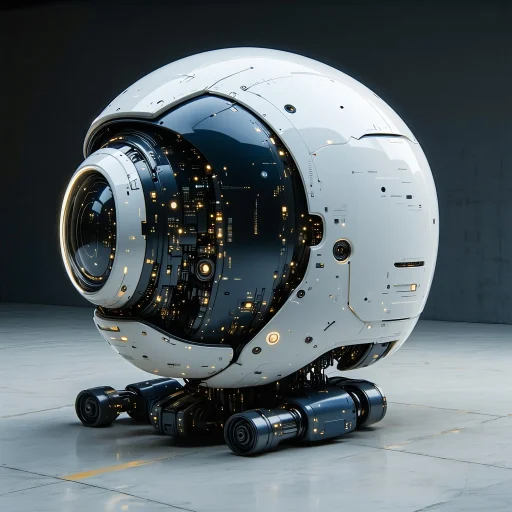
Artificial Intelligence (AI) has transformed from a distant dream to a revolutionary technology that shapes our world. From its humble beginnings to today's sophisticated systems, AI represents one of humanity's most remarkable technological achievements.
The Pioneering Roots of AI
The story of AI begins in the mid-20th century, with groundbreaking thinkers like Alan Turing laying the foundational concepts. In 1950, Turing proposed the famous "Turing Test" - a method to determine whether a machine could exhibit intelligent behavior indistinguishable from a human.
Key Milestones in AI Development
Early AI research focused on creating systems that could simulate human reasoning. The 1956 Dartmouth Conference marked a critical moment, where researchers first used the term "Artificial Intelligence" and outlined ambitious goals for machine learning and problem-solving.
Breakthrough Technologies
One of the first notable AI programs was ELIZA, developed in 1966 by Joseph Weizenbaum at MIT. This groundbreaking chatbot could simulate conversation by pattern matching and rephrasing user inputs, demonstrating early natural language processing capabilities.
AI in the African Context
African innovators are increasingly contributing to global AI development. Countries like Kenya, Nigeria, and South Africa are emerging as significant tech innovation hubs, developing AI solutions for local challenges.
Year Major AI Development 1950 Turing Test Proposed 1956 Dartmouth Conference 1966 ELIZA Chatbot CreatedModern AI Landscape
Today, AI powers everything from smartphone assistants to complex medical diagnostics. Machine learning and neural networks have pushed the boundaries of what machines can learn and accomplish.
For more insights, check out authoritative African tech resources like TechCabal and Techpoint Africa.