The global footwear industry is undergoing a profound transformation, driven by artificial intelligence technologies that are reshaping how shoes are conceived, manufactured, and marketed. From innovative design processes to personalized customer interactions, AI is becoming an increasingly critical tool for footwear companies seeking competitive advantage.
As technology continues to evolve, leading brands are discovering unprecedented opportunities to leverage machine learning, computer vision, and predictive analytics across their entire value chain. This technological integration is not just a trend, but a fundamental shift in how the footwear sector operates.
Design and Innovation: AI as a Creative Partner
Artificial intelligence is revolutionizing footwear design by enabling more sophisticated and data-driven creative processes. Advanced algorithms can now analyze consumer preferences, trend data, and historical sales information to generate design recommendations that blend aesthetic appeal with market demand.
Companies like Nike and Adidas have already implemented AI-powered design tools that can generate multiple prototype variations in minutes, dramatically reducing the traditional design cycle. These systems can predict potential consumer preferences with remarkable accuracy, allowing designers to make more informed creative decisions.
Production Optimization and Supply Chain Intelligence
AI's impact extends far beyond design, fundamentally transforming manufacturing and supply chain management. Machine learning algorithms can now predict production requirements, optimize inventory management, and identify potential inefficiencies in real-time.
Predictive maintenance powered by AI helps manufacturers anticipate equipment failures before they occur, reducing downtime and maintenance costs. Computer vision technologies enable more precise quality control, detecting microscopic defects that human inspectors might miss.
Personalization and Customer Experience
Perhaps the most exciting AI application in footwear is hyper-personalization. Advanced recommendation systems and virtual fitting technologies are creating unprecedented levels of customization for consumers. Machine learning algorithms can now suggest shoes based on an individual's precise foot shape, walking style, and aesthetic preferences.
AI is transforming footwear from a mass-production model to a personalized experience where every customer feels uniquely understood.African Market Implications
For African footwear manufacturers and entrepreneurs, AI represents both a challenge and an extraordinary opportunity. While implementing these technologies requires significant investment, they can help local producers compete more effectively in the global market by enhancing design capabilities and production efficiency.
Countries like Ethiopia and Kenya, which are emerging as significant footwear manufacturing hubs, could leverage AI to leapfrog traditional industrial constraints and develop more sophisticated production ecosystems.
Challenges and Ethical Considerations
Despite its immense potential, AI integration in footwear also presents challenges. Data privacy, algorithmic bias, and the potential displacement of traditional manufacturing roles are critical considerations that companies must navigate responsibly.
Successful AI implementation requires a holistic approach that balances technological innovation with human creativity and ethical considerations. Companies must invest not just in technology, but in training and supporting their workforce through this digital transformation.
Future Outlook
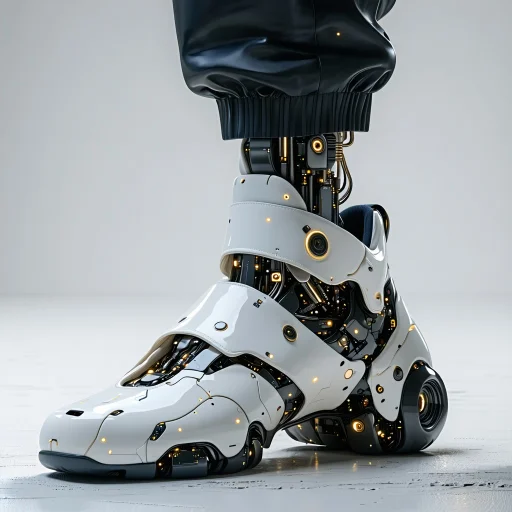
The convergence of AI with footwear technology suggests a future where shoes are increasingly intelligent, adaptive, and personalized. From self-adjusting athletic shoes to environmentally responsive designs, the possibilities seem boundless.
As machine learning algorithms become more sophisticated and data collection more nuanced, we can expect even more radical innovations in the coming years. The footwear industry stands at the cusp of a technological revolution that will redefine how we conceive, produce, and interact with shoes.