The global technology industry is entering another major turning point and this time the spotlight is firmly on Google.
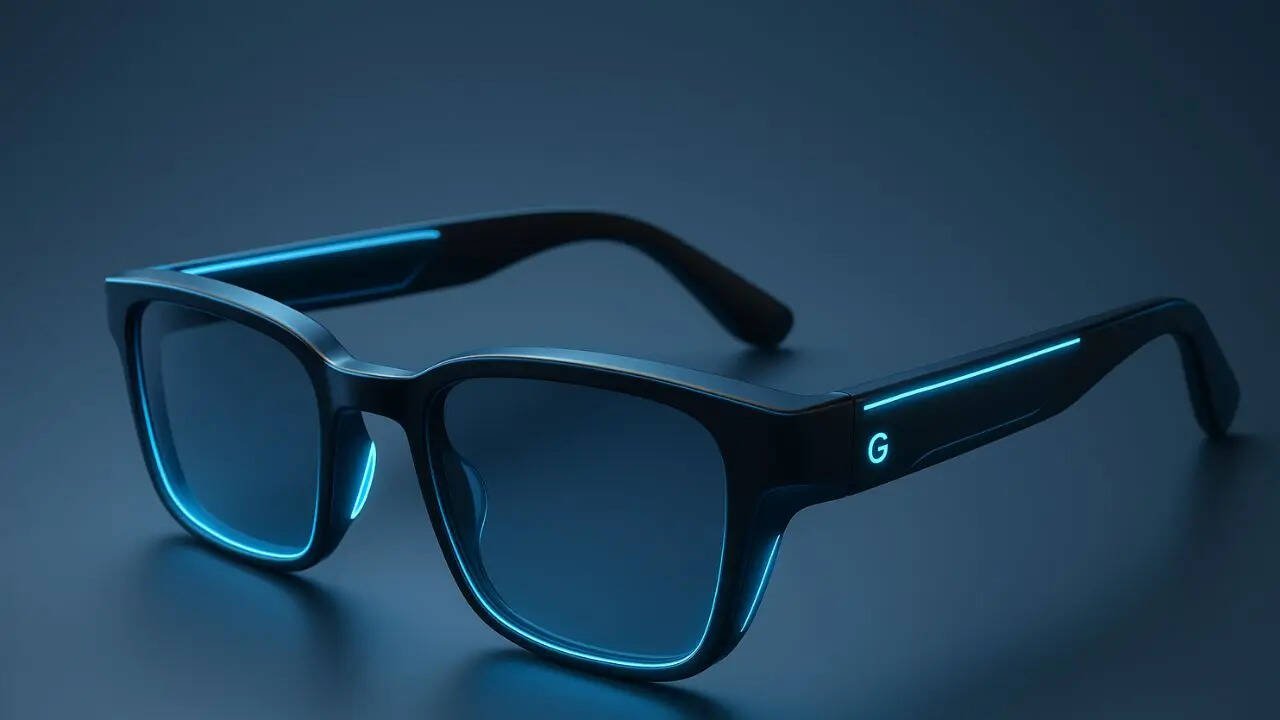
Ahead of the highly anticipated Google I/O 2026 developer conference,reports surrounding Google’s upcoming Android XR smart glasses and Gemini AI ecosystem have exploded across the tech world, triggering discussions among developers, investors, cybersecurity experts,hardware manufacturers, and ordinary consumers alike.
What initially looked like another experimental wearable product is now being viewed very differently.
Many analysts believe Google could be preparing one of the boldest technological transitions the company has attempted in more than a decade.
And if the current reports are accurate, the implications could extend far beyond smart glasses alone.
Industry experts now say the developments surrounding Android XR and Gemini AI may represent the beginning of a completely new computing era, one where artificial intelligence moves from smartphone apps into everyday human environments.
For several years, Google’s annual I/O developer conference has remained one of the most important events in global technology.
The event traditionally introduces Android updates, AI developments, search innovations, consumer hardware, cloud technology, and experimental projects.
However, this year’s conference appears to be attracting an unusually high level of attention.
Across social media platforms, technology forums, YouTube channels, Reddit communities, and investment circles, conversations surrounding Google’s AI ambitions have intensified dramatically over the past few weeks.
Much of that attention is now centered around Gemini AI, Android XR, AI agents, smart wearable devices, real-time AI assistants and AI-powered glasses.
Technology observers believe Google is attempting to position itself at the center of what could become the next global computing platform.
Unlike previous attempts at futuristic wearable technology, analysts say this time may be different because artificial intelligence has matured significantly.
One major reason this story is gaining traction is because many people still remember the original Google Glass project.
When Google introduced Google Glass years ago, the device quickly became one of Silicon Valley’s most controversial experiments.
Although the product was praised for innovation,it faced several major problems including weak battery life,limited AI capabilities,privacy concerns,high pricing, poor public acceptance, and social discomfort around wearable cameras.
Eventually,public enthusiasm faded.
For years afterward, many people assumed smart glasses would never become mainstream.
But the situation in 2026 looks completely different.
Unlike the earlier Google Glass era, modern AI systems are now capable of real-time conversation, image recognition, voice interaction, live translation, context awareness, and intelligent task management.
That technological evolution may now be giving Google a second chance.
Reports suggest the company has spent years quietly rebuilding its wearable ambitions around Gemini AI and Android XR.
Android XR is reportedly being designed as Google’s next-generation operating system for immersive and wearable devices.
According to early reports, the platform could support smart glasses, augmented reality devices, mixed reality headsets, AI-assisted wearable systems, and future XR hardware ecosystems.
Industry insiders say Google wants Android XR to become what Android became for smartphones years ago, a dominant operating system powering an entire ecosystem of hardware manufacturers.
If successful, Android XR could eventually power devices created not only by Google itself, but also by multiple technology partners globally.
That possibility is already attracting enormous attention within the tech industry.
While much public discussion focuses on the glasses themselves, experts say the true centerpiece of Google’s strategy is Gemini AI.
Gemini is expected to function as the intelligence layer powering the entire Android XR experience.
That means the AI system may eventually understand surroundings visually, respond conversationally, deliver contextual information, manage digital tasks automatically, and assist users continuously throughout the day.
This is important because it signals a shift away from traditional app-based computing.
Instead of users manually opening applications repeatedly, AI systems may begin proactively handling tasks through natural interaction.
Technology analysts describe this as the rise of ambient computing.
In simple terms, AI becomes present everywhere around the user rather than existing only inside a smartphone screen.
And that idea is rapidly becoming one of the most important trends in modern technology.
The growing attention around Google’s AI wearable plans is not happening in isolation.
The global AI race has intensified dramatically over the past two years.
Major companies are now investing billions into AI infrastructure, semiconductor development, AI assistants, robotics, wearable computing, and real-time machine learning systems.
The competition now includes Google, Meta, Apple, Microsoft, OpenAI, Amazon, and Samsung.
Each company is attempting to secure dominance in the next generation of computing technology.
Industry analysts increasingly believe the future may no longer revolve entirely around smartphones.
Instead,future computing may become voice-driven,AI-assisted, wearable, context-aware, and environmentally integrated.
That possibility is why wearable AI products are attracting serious investment interest globally.
Another major reason Google’s AI glasses are being taken more seriously is because Meta’s Ray-Ban smart glasses have shown stronger consumer interest than many experts expected.
Meta’s products demonstrated something extremely important.
People are becoming more comfortable wearing AI-enabled devices in public.
This represents a major psychological shift compared to the earlier Google Glass era.
Consumers are now significantly more familiar with voice assistants, AI chatbots, wearable devices, camera enabled technology, and real-time digital interaction.
As AI adoption accelerates worldwide, resistance toward wearable technology appears to be weakening.
That trend may create favorable conditions for Google’s return to smart glasses.
Despite the excitement, concerns surrounding privacy are beginning to resurface.
Critics argue that widespread adoption of AI glasses could introduce several risks including constant surveillance, facial recognition misuse, unauthorized recordings, personal data collection, behavioral tracking, and security vulnerabilities.
Civil liberties groups have already warned that wearable AI devices could create major ethical challenges if regulations fail to keep pace with technological development.
Technology companies are therefore expected to face growing pressure regarding data transparency, user consent, AI accountability, camera regulations, and biometric protection.
Google has indicated it is taking privacy concerns seriously while continuing development efforts.
Perhaps the most important part of this story is what it could mean for smartphones themselves.
For nearly two decades, smartphones have dominated digital life globally.
Entire industries now depend on smartphone ecosystems including social media, mobile banking, e-commerce, content creation, transportation apps,communication services, and entertainment platforms.
However,some technology experts believe AI wearables may slowly reduce dependence on traditional smartphones over time.
Instead of constantly checking screens manually, users may eventually rely on voice commands, visual AI prompts, gesture controls, contextual assistance, and real-time wearable interfaces.
While smartphones are unlikely to disappear immediately, the emergence of wearable AI systems could gradually reshape how people interact with technology daily.
That possibility is now becoming one of the biggest discussions inside Silicon Valley.
Technology analysts believe the upcoming Google I/O conference may now carry enormous significance for Google’s future.
The company is expected to unveil major Gemini AI updates, Android 17 improvements, Android XR developments,AI-powered hardware demonstrations,expanded AI assistant capabilities and new integrations across Google products.
If the demonstrations impress developers and consumers, Google could significantly strengthen its position in the global AI competition.
The stakes are especially high because artificial intelligence is rapidly becoming the central battleground of the modern technology industry.
Beyond consumer gadgets, experts believe AI wearables may eventually create entirely new markets.
Potential future applications include healthcare monitoring, industrial assistance, education support, real-time translation, logistics operations, security systems, remote collaboration, tourism enhancement, and accessibility support for disabled users.
This means the impact of wearable AI may extend far beyond entertainment or convenience alone.
Several research firms now believe the wearable AI sector could become a multi-trillion-dollar global industry over the next decade.
Software developers are also paying close attention to Android XR because a successful platform launch could create new app ecosystems, XR marketplaces, AI integration services, wearable advertising systems, and developer monetization opportunities.
Historically, developers play a crucial role in determining whether new technology platforms succeed.
If developers embrace Android XR aggressively, Google’s ecosystem could expand rapidly.
At the moment, many questions still remain unanswered.
Consumers have not yet seen full product details. Pricing remains unclear. Battery performance is still unknown. Real-world adoption is uncertain.
But one thing is becoming increasingly obvious.
The global technology industry is preparing for a future where artificial intelligence becomes far more integrated into everyday life than ever before.
And Google appears determined to position itself at the center of that transformation.
Whether Android XR becomes a revolutionary success or another ambitious experiment remains to be seen.
But ahead of Google I/O 2026,one reality is already clear.
The race to build the future beyond smartphones has officially begun.