This week, something is happening in global financial markets that will affect every African who uses Starlink and most people on this continent have no idea it is coming.
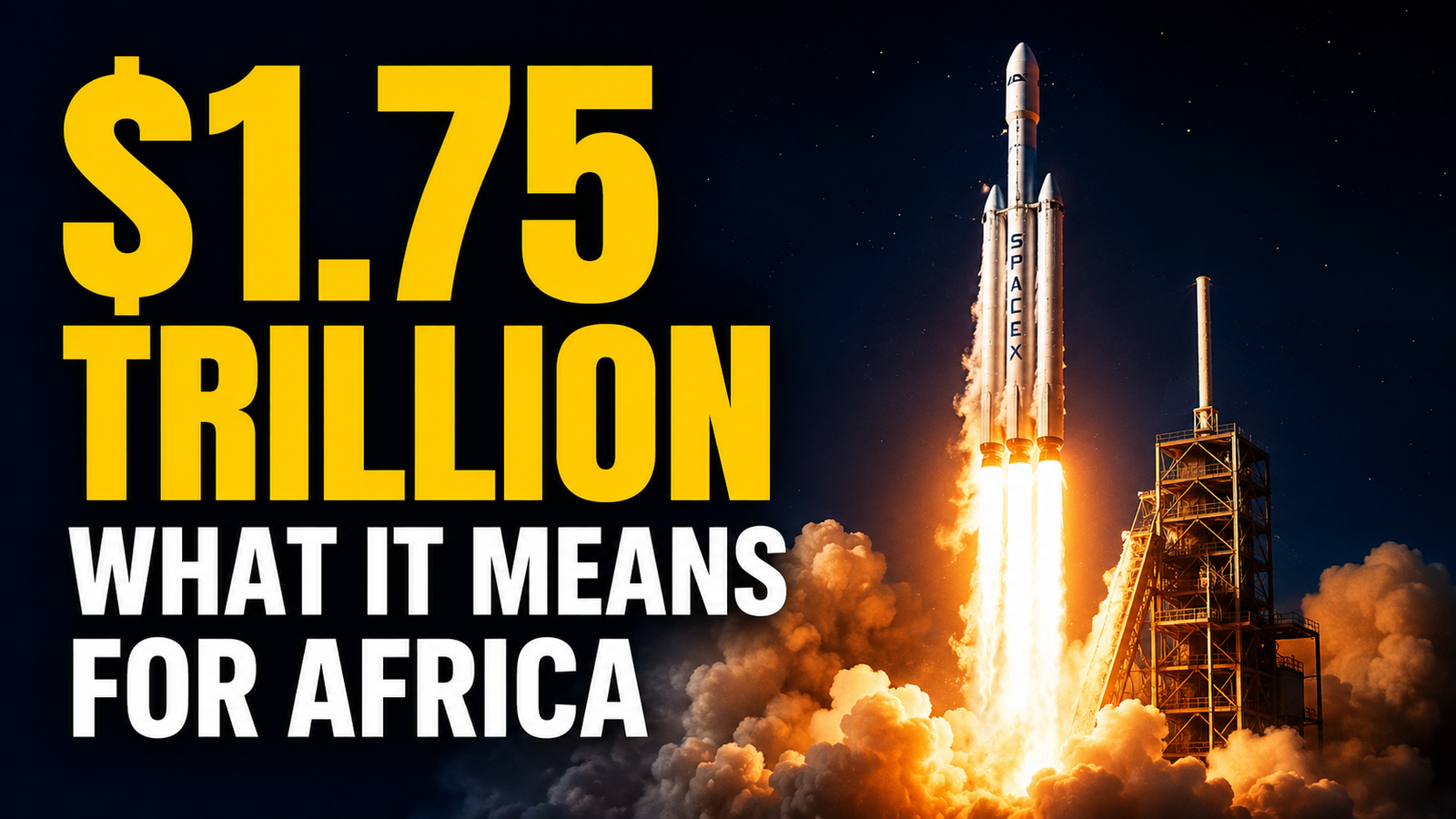
SpaceX is targeting a June 12, 2026 Nasdaq listing under the ticker SPCX, after confidentially filing with the US SEC on April 1, 2026.
SpaceX plans to market its IPO at a fixed price of $135 per share, with a valuation of $1.77 trillion which would make Elon Musk's firm the seventh-biggest company in the United States, above Tesla, which has a market cap of about $1.6 trillion.
SpaceX is targeting a $75 billion raise which would be the largest IPO in stock market history, surpassing Saudi Aramco's record $29 billion raise in 2019.
This is a massive financial event. But for Nigerians and Africans, the most important question is not about Wall Street. It is about what happens to Starlink Africa's fastest growing internet provider once SpaceX answers to public shareholders.
What Is an IPO and Why Does It Matter?
For readers who are not familiar with stock market terminology, an IPO or Initial Public Offering is when a private company sells shares to the general public on a stock exchange for the first time.
Before an IPO, a company like SpaceX is owned privately by its founders, early investors, and employees. After an IPO, anyone — including ordinary people can buy a small piece of the company by purchasing shares on the stock exchange.
Going public raises enormous amounts of capital. In SpaceX's case, potentially $75 billion in a single transaction. But it also comes with a major obligation — public shareholders expect returns. They expect profit growth. They expect the company to constantly expand revenue.
That obligation to shareholders is exactly why this IPO matters for every African Starlink user.
The Numbers Behind SpaceX's Valuation
SpaceX's most recently confirmed valuation is $1.25 trillion, set in February 2026 when it completed the largest corporate merger in history by acquiring xAI. Starlink is the only profitable division, generating $11.4 billion in 2025 revenue — 61 percent of SpaceX's total — while the launch and AI segments both ran operating losses.
Read that again. Starlink the satellite internet service that millions of Africans are now paying for every month — is the only profitable part of SpaceX. It generates 61 percent of the entire company's revenue.
That means Starlink's subscribers including Nigeria, Africa's largest Starlink market are essentially funding SpaceX's rockets, its Starship programme, and its AI ambitions.
Despite the hype surrounding the IPO, Morningstar analyst Nicholas Owens wrote that SpaceX's actual value is $780 billion about 55 percent below its target IPO valuation of $1.75 trillion.
Several factors will inflate the stock price after the June 12 IPO, including outsized interest from investment banks underwriting it and a small float resulting from the company's decision to offer only 3 percent of its shares.
Musk will own over 82 percent voting control after the offering. Meaning even as a public company Elon Musk will still make every major decision at SpaceX.
What This Means for Starlink in Africa
Here is where this story gets directly relevant to Nigeria and the rest of Africa.
Once SpaceX is public, it faces quarterly earnings pressure from shareholders. That means every three months, the company must show that revenue is growing, costs are being managed, and profits are increasing.
Starlink is the only profitable SpaceX division. So pressure to grow Starlink revenue will intensify significantly after the IPO.
For Africa which is one of Starlink's fastest growing markets this creates two possible outcomes.
Outcome 1 Aggressive Africa expansion. To grow Starlink revenue, SpaceX could push deeper into African markets, offer more competitive pricing to attract subscribers, and invest in Direct-to-Cell infrastructure that brings more Africans online. This would be good for African connectivity.
Outcome 2 Price increases. Alternatively, to improve profit margins per subscriber, SpaceX could raise Starlink prices in markets where demand is strong and competition is limited. Nigeria with the most Starlink subscribers in Africa would be a prime target for this.
Which outcome happens will depend significantly on how African governments regulate satellite internet operators and how much competitive pressure Starlink faces from local alternatives.
This is why the conversation we started last week about Africa capturing the value of satellite internet revenue just became even more urgent.
Can Nigerians Invest in the SpaceX IPO?
This is the question many Nigerians are asking right now. The short answer is it is complicated but not impossible.
SpaceX is listing on Nasdaq an American stock exchange. Nigerian investors cannot buy shares directly through Nigerian banks or local brokerages at launch.
However, Nigerians who have accounts with international investment platforms such as Bamboo, Rise, or Trove may be able to access SpaceX shares once they begin trading on Nasdaq on June 12.
There are important cautions to consider before investing. On private secondary markets, SpaceX shares were trading between roughly $420 and $674 per share as of early June, according to data compiled from platforms including Forge Global and EquityZen. The IPO price of $135 per share represents a significant discount to those private market prices but the $1.75 trillion valuation is still disputed by major analysts.
Morningstar says SpaceX may actually be worth closer to $780 billion meaning investors buying at the IPO price could be significantly overpaying if the stock corrects after the initial excitement fades.
As always this is not financial advice. Do your own research before making any investment decision.
The Bigger Picture for Africa
SpaceX going public is a landmark moment for the global technology industry. But for Africa, it is a reminder of a structural reality that needs urgent attention.
The company that operates Africa's fastest growing internet infrastructure a service that millions of Africans depend on for education, business, and communication is about to be accountable primarily to American shareholders.
Its pricing decisions, its expansion priorities, its infrastructure investment choices all of these will now be influenced by quarterly earnings targets set in New York and evaluated by Wall Street analysts.
Africa needs to be at the table when those decisions are made. Not just as a consumer market but as a regulatory force with clear rules about how satellite internet operators must contribute to local economies.
The SpaceX IPO is not just a financial event. It is a call to action for African policymakers.
SpaceX listing on Nasdaq this Thursday is the largest IPO in stock market history. And because Starlink is SpaceX's only profitable division — funding rockets, AI, and Starship all by itself Africa's growing satellite internet spending is more central to this story than most people realise.
Watch what happens to Starlink pricing and expansion strategy in the months after the IPO. That will tell you everything about whether SpaceX sees Africa as a partner in growth or simply its most reliable source of subscription revenue.
Stay informed. Follow Overite for weekly coverage of African and Nigerian tech, business, and policy stories that matter.
Read More
MEXC SpaceX Valuation and IPO Target in 2026
Investing.com SpaceX Stock: IPO Date, Share Price & News