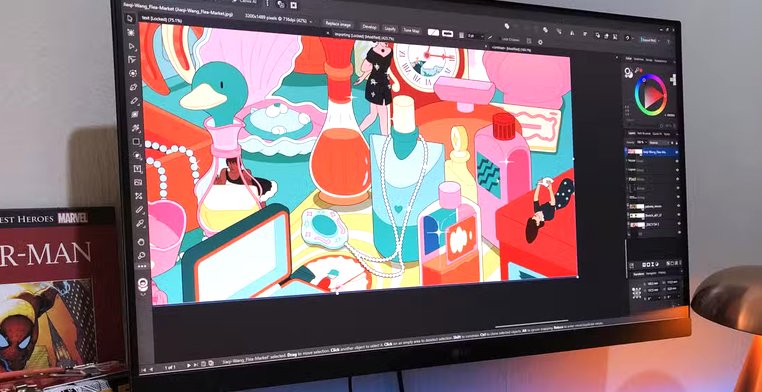
A new wave of creative software is emerging, and one tool is gaining attention for offering professional design capabilities completely free.
The software, Affinity, is positioning itself as a powerful alternative to popular design platforms like Adobe Creative Cloud, Figma, and Canva, giving creators access to advanced tools without the expensive subscriptions.
A Full Design Suite in One Tool
Unlike many design tools that specialize in just one area, Affinity combines three major creative functions into a single platform:
- Pixel editing for photo manipulation (similar to Photoshop)
- Vector design tools for illustrations and graphics (similar to Illustrator)
- Layout tools for documents and publications (similar to InDesign)
This means designers can handle photo editing, branding assets, marketing graphics, and digital layouts without switching between multiple apps.
Why Creators Are Paying Attention
One of the biggest reasons creators are exploring alternatives is cost. Adobe’s Creative Cloud subscription can cost over $50 per month, while Affinity’s new model allows users to access the full design suite without recurring fees.
For freelancers, startups, and student creators, that difference can be significant.
The platform also supports many popular file formats such as PSD, AI, and PDF, making it easier for designers to collaborate with teams that still use Adobe tools.
Where Figma Still Wins
While Affinity offers strong tools for design and publishing, it still lacks advanced collaboration and prototyping features, which are essential for product and UX teams.
This means Figma remains the preferred tool for UI/UX design workflows, especially when teams need real-time collaboration.
A Sign of a Bigger Shift in Creative Tools
The rise of free or affordable professional design tools signals a broader shift in the creative software market.
As more creators look for accessible alternatives to expensive subscriptions, tools like Affinity could reshape how designers, developers, and digital creators work.
For many users, the question is no longer whether alternatives exist—but whether they can replace traditional industry tools entirely.