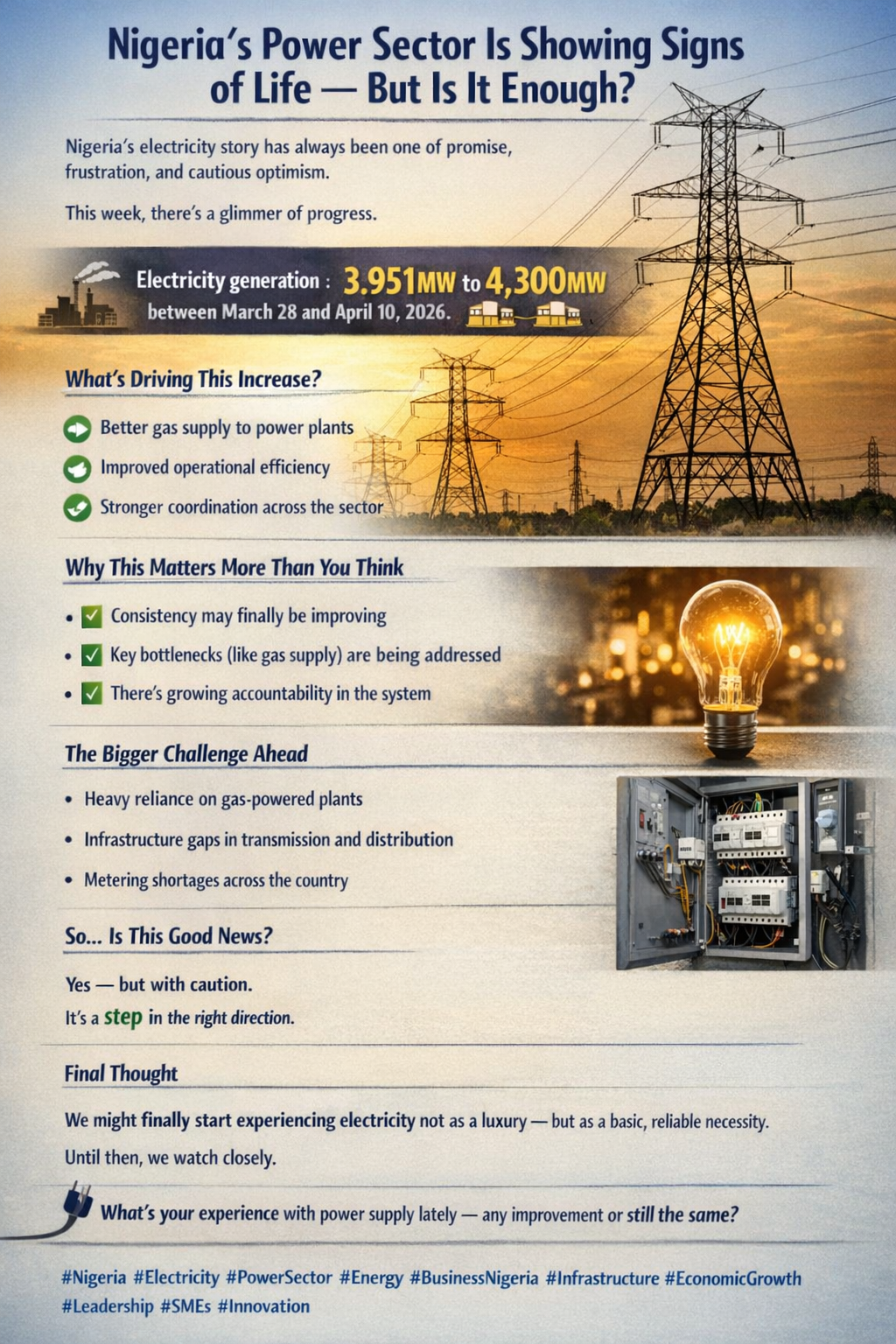
Nigeria’s power sector is showing signs of life—but is it enough?
Recent reports indicate that electricity generation in Nigeria has improved slightly, rising from about 3,951MW to over 4,300MW. On the surface, this looks like progress. But when you take a closer look, it becomes clear that this improvement is only a small step in a much larger and more complicated journey.
Nigeria has an installed capacity of over 13,000MW, yet it consistently delivers far less than that to homes and businesses. This gap highlights deep structural problems across the entire power value chain—from generation to transmission and distribution.
The reality is that the sector is not just struggling with low generation. Issues such as gas supply disruptions, aging infrastructure, weak transmission networks, and inefficient distribution systems continue to limit performance. Even when power is generated, getting it reliably to end users remains a major challenge.
For everyday Nigerians, this means one thing: unreliable electricity. Many households and businesses still depend heavily on generators, increasing the cost of living and doing business. This ongoing challenge has persisted for years despite reforms aimed at improving the sector.
While the recent increase in generation is a positive signal, it is not enough to meet the country’s growing demand. Experts agree that meaningful progress will require coordinated improvements across all parts of the system—fuel supply, infrastructure upgrades, transmission expansion, and better distribution efficiency.
So yes, Nigeria’s power sector may be showing signs of life. But until these deeper issues are addressed, stable and reliable electricity will remain out of reach for many.



Duke Gift 1 month ago
This is nice but your image can be better download image from google and again edit your post too many spaces i believe with time you will get better 👍🏻