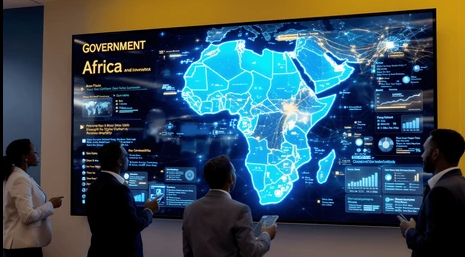
Across Africa, a quiet revolution is unfolding—one that is transforming everyday smartphones into powerful tools for wealth creation, innovation, and global impact. What was once seen primarily as a device for communication and entertainment has evolved into a gateway for entrepreneurship, allowing millions of young people to access knowledge, build skills, and launch businesses directly from their pockets. In a continent where traditional pathways to success can be limited by structural challenges, the smartphone is emerging as a new equalizer, redefining what it means to start from nothing and succeed in the digital age.
The Power of Access
The rapid spread of smartphones and mobile internet across Africa has fundamentally changed how people interact with information, education, and opportunity. With a single device, individuals can now learn programming, digital marketing, design, and a wide range of high-income skills through online platforms that were previously out of reach. This level of access is breaking down long-standing barriers and enabling a new generation of self-taught entrepreneurs to emerge, armed not with degrees or formal training, but with practical knowledge and the determination to apply it. As connectivity continues to expand, the number of people able to participate in the digital economy is growing at an unprecedented rate.
Turning Skills Into Income
Access alone is not enough—what truly drives this movement is the ability to convert knowledge into income through digital platforms and services. Young Africans are leveraging their smartphones to freelance, build applications, manage online businesses, and offer services to clients both locally and internationally. From developing software to running social media campaigns, these activities are creating new streams of income that are not tied to physical location or traditional employment structures. This shift is empowering individuals to take control of their financial futures, often starting with little more than a smartphone and an internet connection.
The Rise of Micro-Startups
One of the most significant outcomes of this transformation is the emergence of micro-startups—small, often solo ventures that are built and managed entirely through digital tools. Unlike traditional businesses that require significant capital, physical infrastructure, and large teams, these startups can be launched with minimal resources and scaled over time. Entrepreneurs are creating mobile apps, e-commerce stores, digital products, and content platforms that generate revenue while operating entirely online. This model not only reduces risk but also allows for rapid experimentation, enabling founders to test ideas, learn from feedback, and refine their approach without heavy financial pressure.
Local Solutions, Global Reach
What makes Africa’s smartphone-driven startup ecosystem particularly powerful is its ability to combine local insight with global reach. Entrepreneurs are building solutions that address specific challenges within their communities, such as access to financial services, education, and logistics, while also tapping into international markets through digital distribution. This dual focus allows startups to create meaningful impact at home while scaling their operations beyond borders. As a result, ideas that begin in small towns or urban centers can quickly gain traction on a global stage, demonstrating that innovation is no longer limited by geography.
Overcoming the Challenges
Despite the opportunities, the path from smartphone to startup is not without obstacles, as entrepreneurs must navigate issues such as inconsistent internet connectivity, limited access to funding, and evolving regulatory environments. However, these challenges have also fostered a culture of resilience and creativity, pushing founders to find innovative solutions and operate efficiently under constraints. Many have learned to bootstrap their ventures, leverage free tools, and build networks that support growth and collaboration. This ability to adapt and persist is becoming one of the defining characteristics of Africa’s emerging tech ecosystem.
A New Definition of Wealth
Perhaps the most significant shift taking place is not just economic, but conceptual, as the idea of wealth itself is being redefined in the digital age. For many young Africans, wealth is no longer solely about traditional careers or physical assets, but about the ability to create value, generate income independently, and build something scalable. The smartphone has become a symbol of this new reality—a tool that represents access, opportunity, and the potential to transform ideas into tangible results. This shift is inspiring a new mindset, where success is seen as something that can be created, rather than waited for.
The Future Is Mobile
As technology continues to evolve and mobile infrastructure improves, the role of smartphones in driving entrepreneurship across Africa is only expected to grow stronger. Emerging technologies, digital payment systems, and expanding internet coverage will further enhance the ability of individuals to build and scale businesses from anywhere. The next wave of successful startups may not come from large corporations or well-funded institutions, but from individuals who recognize the power of the tools already in their hands and use them to create something impactful.
The Opportunity Ahead
The journey from smartphone to startup represents more than just a trend—it is a new pathway to wealth that is accessible, scalable, and deeply aligned with the realities of the modern world. For those willing to learn, experiment, and take action, the barriers to entry have never been lower, and the potential rewards have never been higher. In this new landscape, the question is no longer whether it is possible to build something meaningful with limited resources, but whether individuals are ready to take advantage of the opportunities that are already within reach.







Duke 1 month ago
you are still making this bold update your post and also don't use AI generated image is not looking real if not Google will close our account
IFEANYI CHIZARAM SUCCESS 1 month ago
ok sir
IFEANYI CHIZARAM SUCCESS 1 month ago
i checked is not from me, is not in bold