If you still watch TV the old-fashioned way in Nigeria, you have less than 21 days to act — or your screen goes completely dark.
The Federal Government has officially confirmed June 17, 2026 as the launch date for Nigeria's Digital Switch-Over (DSO), marking the end of analogue television broadcasting in the country. This is not a drill. This is not another postponement. This time, it is happening.
Here is everything you need to know before that date arrives.
What Is the Digital Switch-Over?
Nigeria's Digital Switch-Over (DSO) is the government's programme to move all television broadcasting from analogue signals to digital signals. Analogue is the old technology that most free-to-air TVs in Nigeria have used for decades. Digital broadcasting delivers clearer pictures, better sound, and far more channels — all for free.
The National Broadcasting Commission (NBC) and Nigerian Communications Satellite Limited (NIGCOMSAT) are leading the rollout, using a combination of satellite and terrestrial delivery to reach viewers across all 36 states.
What Happens on June 17?
On June 17, Nigeria's new digital broadcasting platform goes live, launching with over 100 free-to-air television channels covering news, sports, education, entertainment, and children's programming — available in multiple Nigerian languages.
Minister of Information Mohammed Idris put it plainly during the announcement: "Free TV everywhere for everybody."
However, the flip side is just as important. If your television set is an old analogue model and you do nothing before June 17, your screen will simply stop receiving any signal. No picture. No sound. Nothing.
Does This Affect You?
Ask yourself one simple question: Does your TV have a built-in digital tuner?
Most modern flat-screen TVs manufactured after 2015 already have digital tuners built in and will work fine without any extra equipment. However, if you own an older CRT television — the thick, box-shaped ones — or a flat screen bought before 2012, there is a very high chance it is analogue-only and will need a decoder.
If you are unsure, check the back of your TV or the user manual for the words "DVB-T" or "DVB-S2." If you do not see those, assume you need a set-top box.
What Is a Set-Top Box and How Much Does It Cost?
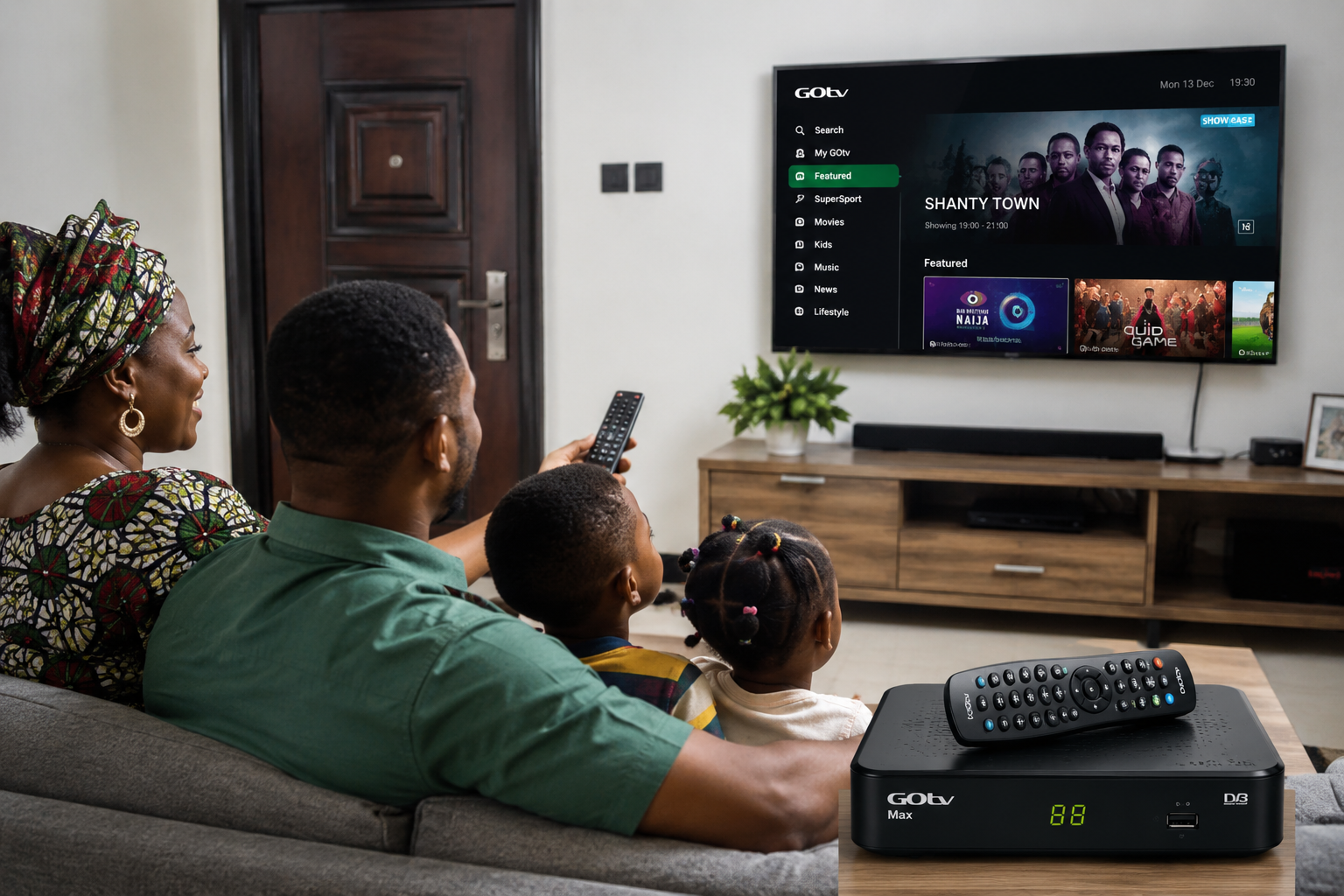
A set-top box (also called a decoder) is a small device that connects to your analogue TV and converts digital broadcast signals so your old screen can display them. Think of it as a translator between the new digital world and your old television.
The good news is that they are affordable. Open-standard DVB-S2 decoders are already available in Nigerian markets at prices ranging between ₦15,000 and ₦25,000. The government is also considering subsidy schemes and voucher programmes to support lower-income households, though full details of those arrangements have not yet been confirmed.
When buying, make sure the box clearly states DVB-T2 (for terrestrial) or DVB-S2 (for satellite) compatibility to ensure it works with the new Nigerian digital broadcasting system.
What About the Final Analogue Switch-Off?
Here is something important that many reports are not making clear enough. June 17 is the launch date of the new digital platform — not the day analogue signals die completely across Nigeria.
The NBC has set December 31, 2028 as the deadline for the final nationwide analogue switch-off. This means you technically have until the end of 2028 before your analogue signal disappears entirely. However, from June 17 onward, the digital platform will be live and the government will actively be winding down analogue infrastructure state by state.
The smart move is to get set up now rather than scramble later.
What Is in It for Nigeria Beyond Better TV?
The DSO is not just about more channels. The bigger prize is what happens to the freed-up analogue radio spectrum — known as the digital dividend.
Those spectrum frequencies will be repurposed for mobile broadband services, potentially accelerating 4G and 5G expansion across underserved parts of the country. The NBC also projects the transition will unlock roughly ₦605 billion in new advertising revenue for the Nigerian media industry and generate over $1 billion from digital spectrum auctions.
For content creators, media businesses, and advertisers, this is a fundamental shift in how Nigerian audiences are measured and reached.
The One Controversy to Watch
Not everyone is celebrating the June 17 date. The Association of Licensed Set-Top Box Manufacturers of Nigeria (STBMAN) has publicly raised concerns, warning that the current implementation feels rushed and does not fully follow the 2012 DSO White Paper approved by the Federal Executive Council. They have called on President Tinubu to pause the process pending wider stakeholder consultation.
Whether or not those concerns slow things down remains to be seen. For now, June 17 stands.
What You Should Do Right Now
If you own an analogue TV, here are your action steps before June 17:
- Check whether your TV has a built-in digital tuner (look for DVB-T2 or DVB-S2 on the spec label)
- If it does not, visit your nearest electronics market and purchase a compatible set-top box for between ₦15,000 and ₦25,000
- Connect the decoder to your TV using an HDMI or AV cable
- Run a channel scan on the decoder to pick up all available free-to-air digital channels
- Enjoy over 100 channels for free
If you are a student living in a hostel or rented accommodation, check with your landlord now about whether the building's TV setup will be updated in time.
Final Word
Nigeria has been talking about this switchover for nearly two decades. The delays, the pilot programmes, the missed deadlines — all of it is now behind us. June 17 is 21 days away and for the first time, the government appears fully committed to making it happen.
Whether you see this as a long-overdue upgrade or an inconvenient disruption, the outcome is the same: Nigeria's television landscape is about to change permanently. The viewers who prepare now will be watching over 100 free channels in crystal-clear digital quality. Those who do not may be left with a blank screen.
Do not wait. Get your decoder before the rush hits the markets.