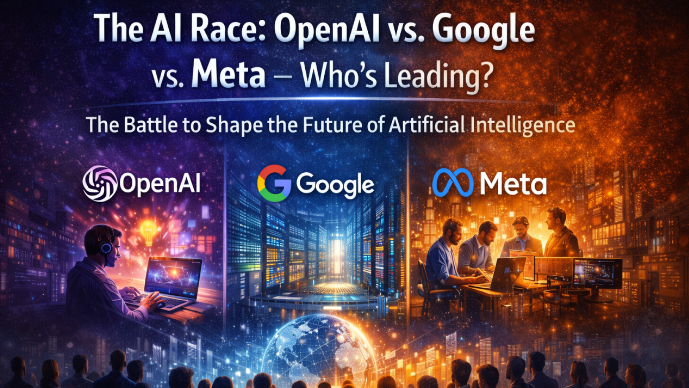
While consumers interact with AI tools through chatbots, search engines, and digital assistants, a much larger competition is unfolding behind the scenes. Some of the world's most influential technology companies are competing to shape the future of artificial intelligence, investing heavily in research, infrastructure, and product development. Although this battle rarely resembles traditional corporate rivalries, its outcome could influence how billions of people access information, create content, and interact with technology in the years ahead.
Competing Visions of AI
One of the most interesting aspects of the AI race is that each major player approaches the technology from a different perspective. Some focus on conversational assistants, others prioritize search and information retrieval, while others emphasize open ecosystems and large-scale user engagement. These differing strategies reflect broader debates about how AI should be integrated into daily life and what role it should play in the digital economy.
More Than a Product War
The competition extends far beyond individual applications because AI is increasingly becoming a platform upon which other products are built. Success in this space could influence everything from software development and education to advertising and enterprise technology. As a result, the companies involved are competing not just for users but for influence over the broader technological ecosystem.
Talent, Infrastructure, and Innovation
The AI race is driven by three critical factors: talent, infrastructure, and innovation. Companies are investing heavily in recruiting top researchers, building advanced computing systems, and developing new models capable of solving increasingly complex tasks. Progress in any one of these areas can create significant advantages, making the competition highly dynamic and difficult to predict.
What It Means for Users
For consumers and developers, this competition is likely to produce faster innovation, more powerful tools, and a wider range of AI-powered products. As companies push each other to improve performance and capabilities, users benefit from technologies that become increasingly useful and accessible. While the ultimate winner remains uncertain, the pace of progress suggests that artificial intelligence will continue to evolve rapidly in the years ahead.