Something big just happened in Africa’s clean energy space and it directly affects millions of Nigerians who depend on motorcycle transport every single day.
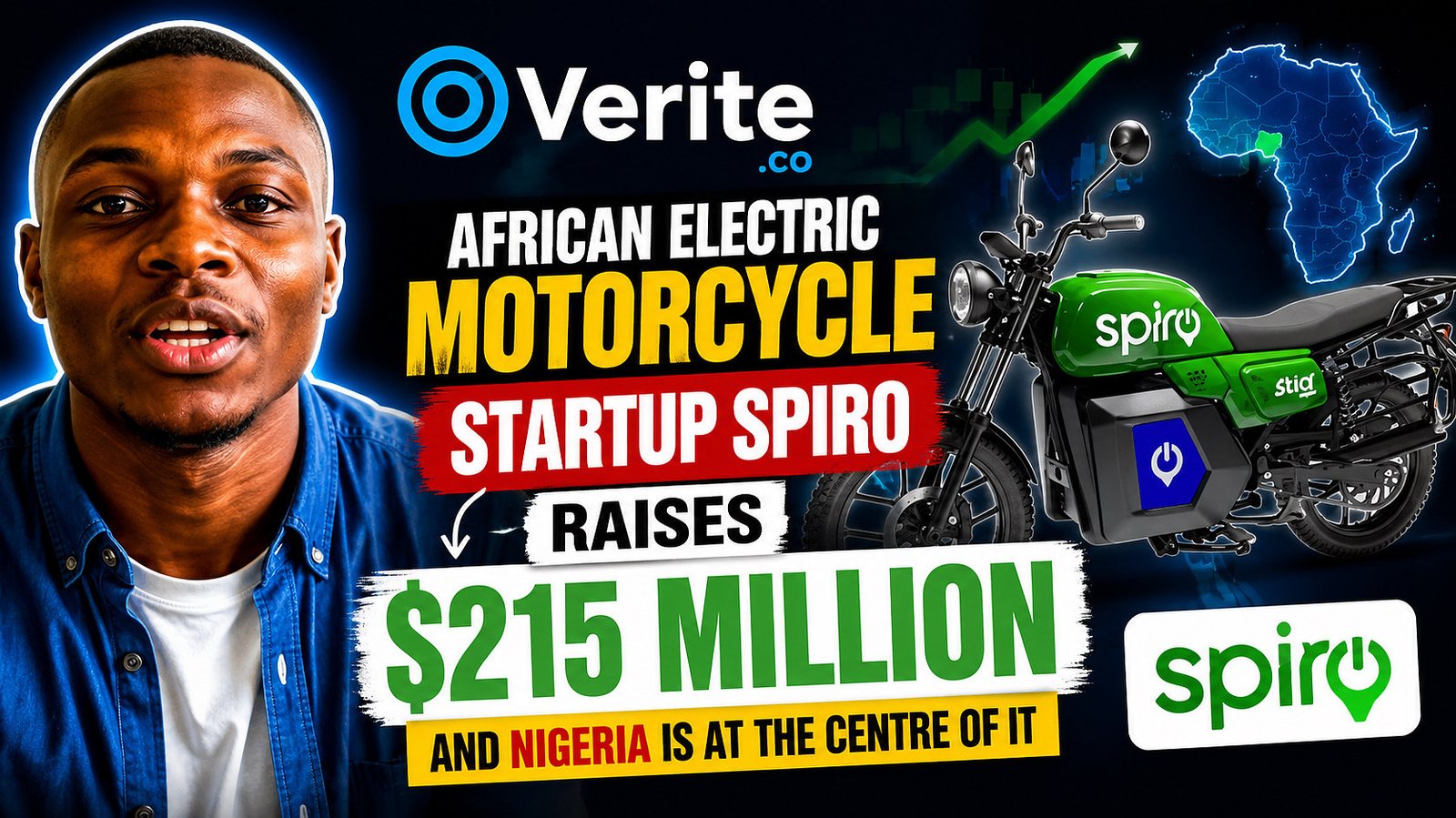
African electric vehicle firm Spiro has raised $215 million in equity financing to expand its battery-swapping and electric mobility infrastructure across Africa. The announcement was made this week and immediately sent shockwaves through Africa’s startup and energy communities.
For context this is not a small startup making big promises. Spiro now has a footprint of more than 100,000 electric motorcycles supported by over 2,500 swapping stations across seven countries, and currently operates in Kenya, Rwanda, Uganda, Togo, Benin, Nigeria and Cameroon.
And Nigeria with its millions of okada riders, rising fuel costs, and desperate need for affordable mobility sits right at the heart of this expansion.
Before we get into the numbers, it is worth explaining exactly what Spiro does because the business model is genuinely clever.
Spiro sells or leases electric bikes to motorcycle taxi riders in Nigeria and East Africa. The company also builds swap stations where riders can quickly exchange their empty batteries for fully charged ones. This eliminates the need to wait for batteries to charge and replaces traditional fuel stations. Instead of buying petrol, riders pay for battery swaps.
Think about what that means for a typical okada rider in Lagos or Abuja. Instead of queuing at a petrol station and spending money on fuel every single day they ride to the nearest swap station, hand in their dead battery, and get a fully charged one in minutes. Like swapping a gas cylinder, but for a motorcycle.
The company says riders using its electric motorcycles can reduce mobility costs by up to 40 percent compared with conventional fuel-powered models. For riders who spend 10 to 12 hours on the road daily that saving is life-changing.
This latest raise is the biggest single funding round in Spiro’s history and one of the largest ever secured by an African electric mobility company.
The investment round was backed by institutional investors in Europe and Africa, including Denmark’s Impact Fund, underscoring growing interest in Africa’s clean transport and energy sectors.
To put the total funding picture in perspective since 2022, Spiro has raised more than $230 million, financing production and assembly facilities across Nigeria, Kenya, Uganda, and Rwanda. The new $215 million brings their cumulative raise to well over $400 million a staggering figure for an African mobility startup.
Gagan Gupta, founder of Spiro, said in a statement: “Across seven active markets, our deployment of 100,000 electric vehicles and 2,500 smart-swap stations has turned sustainable mobility into an affordable, everyday reality.
The new funding will support the expansion of Spiro’s battery-swapping network, strengthen local manufacturing and assembly operations, and accelerate its entry into new markets, including the Democratic Republic of Congo and Ethiopia.
Nigeria is not just one of Spiro’s seven operating markets. It is one of its most strategically important ones.
Spiro’s industrial footprint includes production facilities in Kenya, Rwanda and Uganda, as well as a battery recycling facility in Nigeria. That battery recycling facility is significant it means Nigeria is not just a customer market. It is part of Spiro’s manufacturing and sustainability infrastructure.
Nigeria also has one of the largest motorcycle taxi markets on the entire continent. Okada riders number in the millions across Lagos, Abuja, Kano, Port Harcourt, and hundreds of smaller cities and towns. For these riders, the combination of rising fuel costs and government fuel subsidy removal has made running a petrol motorcycle increasingly expensive.
Spiro’s electric swap model directly addresses this pain point. And with $215 million now available to expand infrastructure more swap stations, more bikes, more coverage Nigerian riders could see significantly more access to affordable electric mobility in the months ahead.
The Spiro story is bigger than just one company’s fundraising success. It signals something important about where global investors now see Africa’s energy and mobility future heading.
The funding comes as African countries seek to reduce dependence on imported fossil fuels, improve energy security, and modernise urban transportation as fuel prices rise and demand for affordable mobility grows.
Lars Bo Bertram, CEO of Impact Fund Denmark, said the investment reflected confidence in Africa’s electric mobility market. When European institutional investors put $215 million into an African electric motorcycle company it is a clear signal that the world’s capital markets now take Africa’s clean transport sector seriously.
More than 30 million battery swaps have been completed through Spiro’s network to date proving that the model works at scale, not just in pilot projects.
Spiro is not alone. Africa’s electric mobility sector is attracting serious capital from multiple directions.
Nigerian fintech startup BFREE, Ethiopian EV startup Dodai which raised $13 million in Series A funding, and South Africa’s Shiprazor which raised $2.65 million are all part of a growing wave of African startups attracting institutional investment in 2026
The pattern is clear. Global investors are no longer treating Africa as a charity project or a frontier market experiment. They are writing serious cheques because African startups are delivering serious results.
As Spiro expands with its new funding, there are several things worth watching closely
Swap station expansion in Nigeria: Will new battery swap stations reach beyond Lagos and Abuja into secondary cities where okada culture is even more dominant?
Local manufacturing growth: The battery recycling facility in Nigeria is a start. Will the new funding support deeper local manufacturing that creates Nigerian jobs?
Affordability for riders: The 40 percent cost reduction claim is compelling. But will it hold as the company scales and as swap station infrastructure costs are passed to riders?
Government policy alignment: Nigeria’s government has sent mixed signals on motorcycle transport in recent years. Will policymakers create an enabling environment for electric motorcycle adoption or continue to restrict okada operations in major cities?
Spiro’s $215 million raise is one of the most significant African startup stories of 2026. It proves that African solutions built specifically for African realities can attract world-class investment. And it puts Nigeria, one of the company’s key markets, in the spotlight as electric mobility moves from niche experiment to mainstream infrastructure.
For millions of Nigerian motorcycle riders facing punishing fuel costs this story is not just about investment. It is about the very real possibility of a cheaper, cleaner way to earn a living.
Stay informed. Follow Overite for weekly coverage of African tech, business, and startup stories that matter.